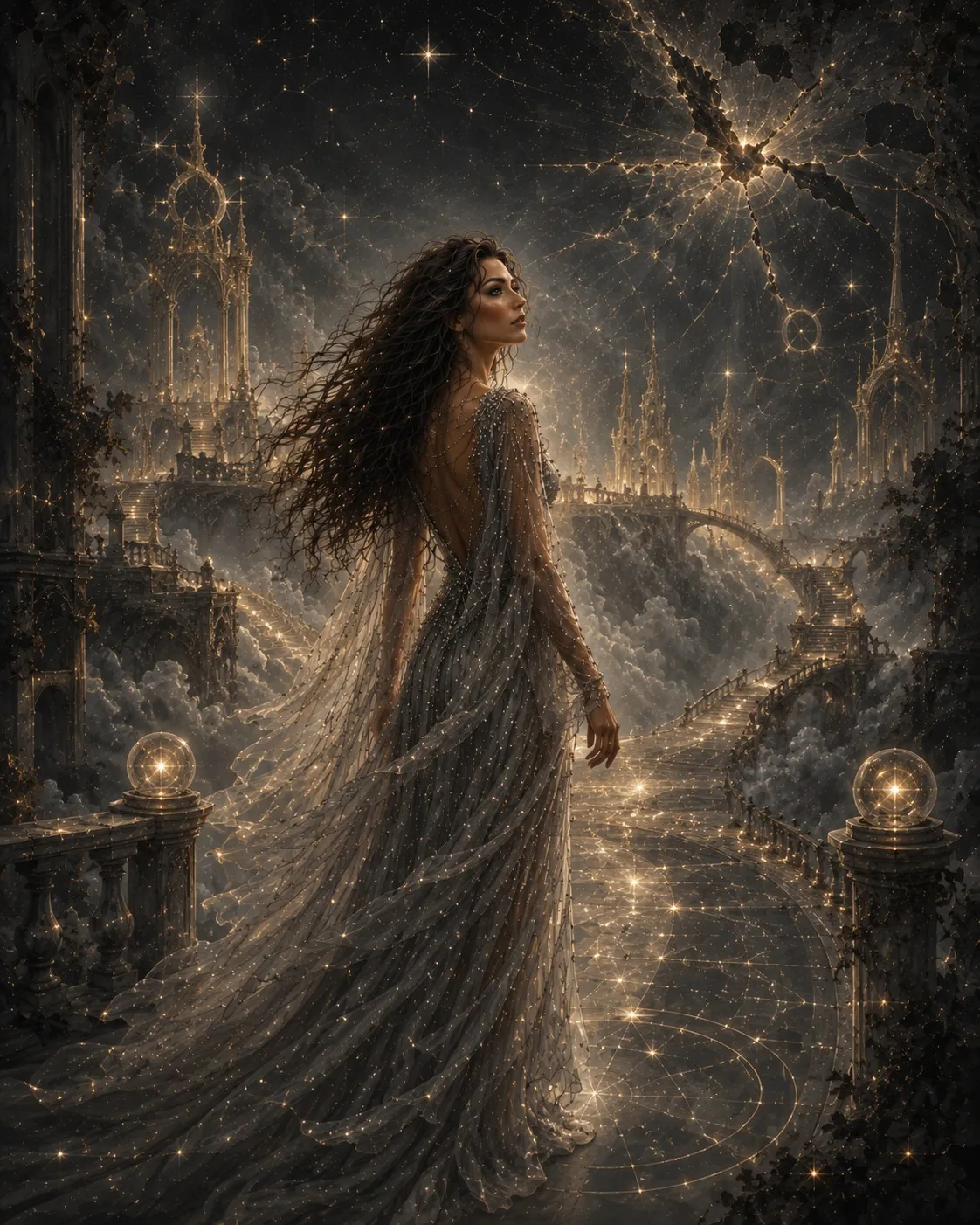
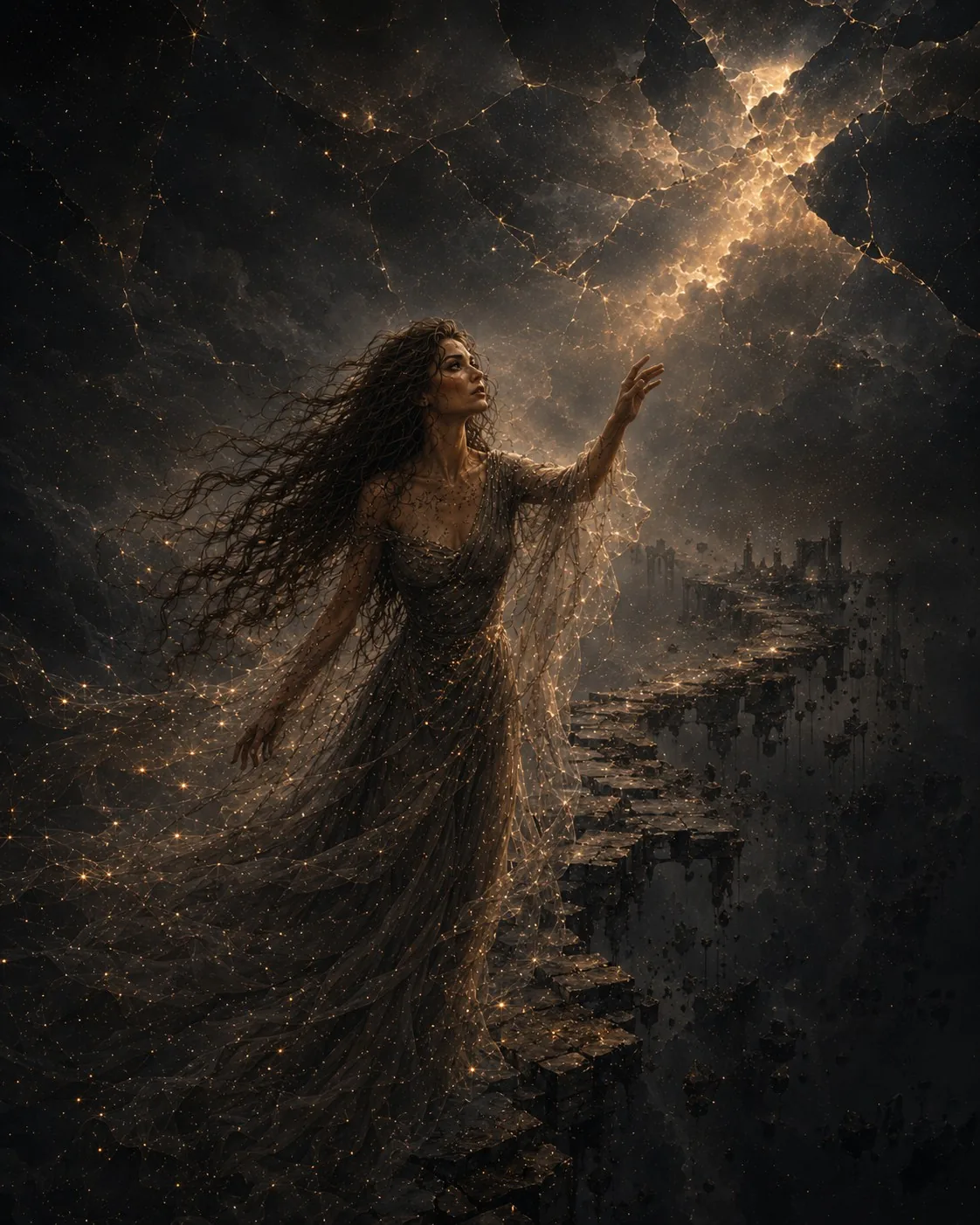
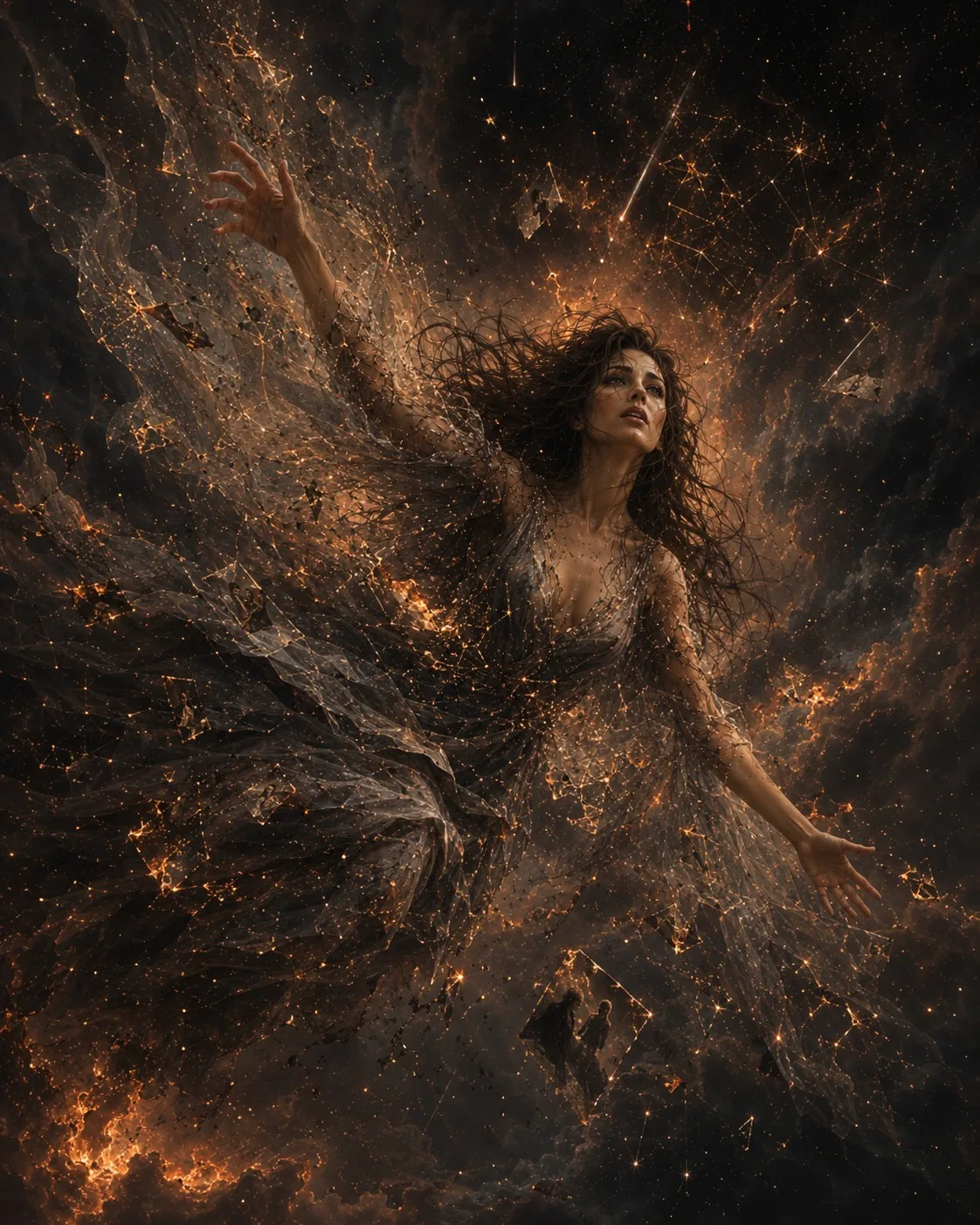
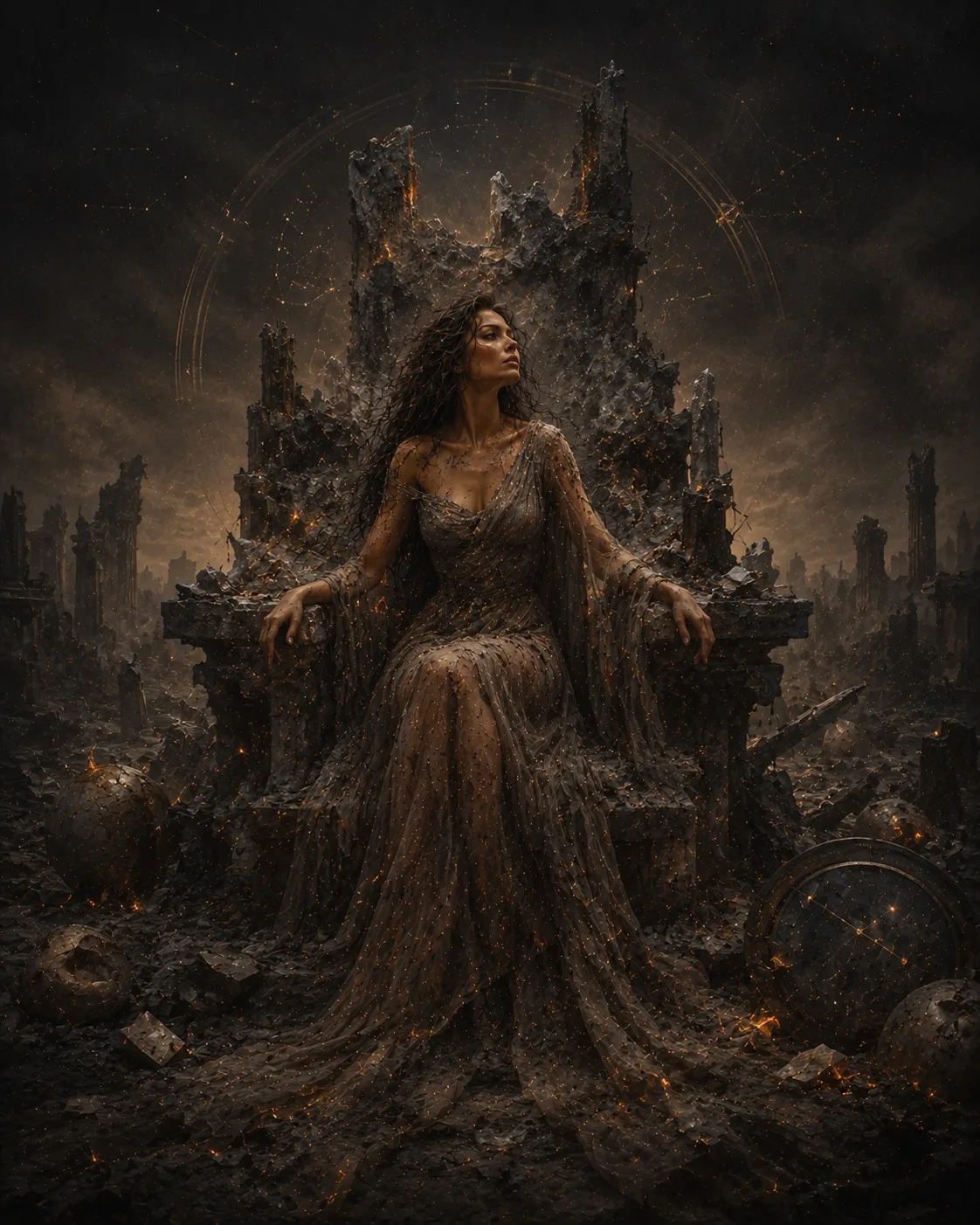
She didn’t fall —
she rose in flame.
When Stars Stop Flying
The fall that becomes a beginning.
She leaves the realm of light and enters gravity, fire, smoke, and silence. No one calls her back. No heaven opens. No hand reaches down. The cosmos watches the fall without intervening — because intervention would mean the journey ends before it begins. What looks like exile is the first act of becoming human.
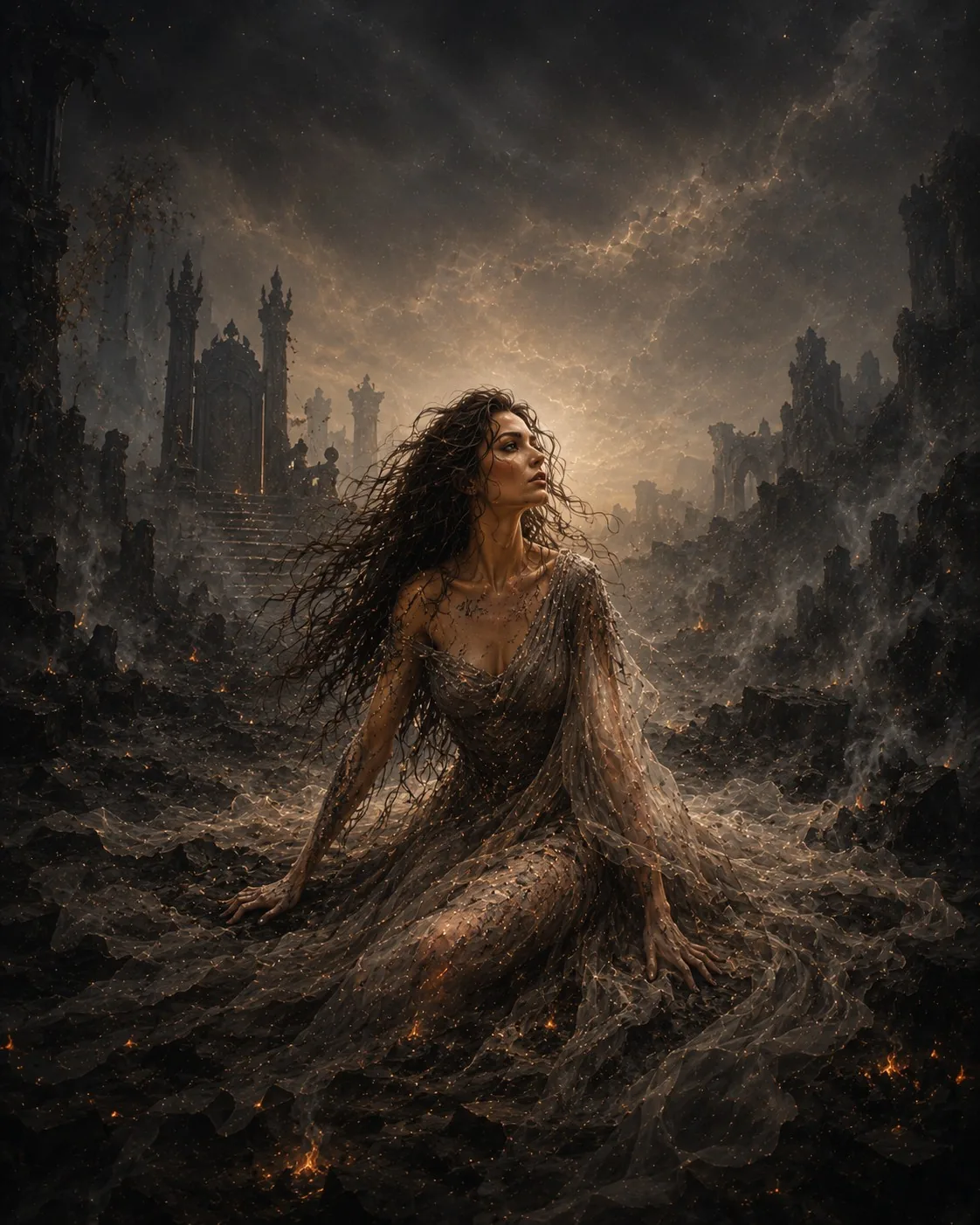
The star that was once made of mathematics and grace is now made of ash and longing, and the terrible knowledge that there is no return. She crashes through the boundary between the eternal and the mortal, and in that passage acquires the one thing pure light can never possess: the capacity for grief.
She does not land in triumph. She lands in ruins — stone, smoke, the silence after impact. But this opera was not written about people who stay on the ground. It was written about what they build from the wreckage.
This is also about every person who has ever watched everything they built collapse — a career, a life, a version of themselves they trusted. The star falling to earth is not only mythology. It is the moment your world resets to zero, and you realise the only thing left is what you carry inside.
From the ruins of arrival, she builds the first thing the opera will return to again and again: a throne from her scars.